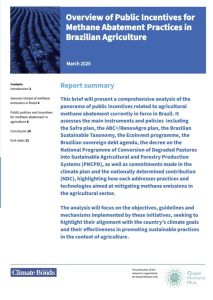
The Climate Bonds Initiative has published a new report titled “Overview of Public Incentives for Methane Abatement Practices in Brazilian Agriculture”.
This report provides a detailed analysis of Brazil’s public incentives for methane abatement in agriculture, a sector responsible for approximately 25% of the country’s greenhouse gas emissions. It reviews key policies and financial instruments such as the Safra Plan RenovAgro and the Brazilian Sustainable Taxonomy, examining their alignment with national climate goals and their effectiveness in promoting sustainable, low-carbon practices.
While Brazil has made significant progress with initiatives like the Ecological Transformation Plan and commitments under the Global Methane Pledge, the report emphasises the need for more targeted and clearly defined policies to maximise methane reduction, particularly in livestock farming. Strengthening these incentives and aligning them with international standards can accelerate Brazil’s transition to climate-smart agriculture and enhance the impact of climate finance.
About The Publication
This brief will present a comprehensive analysis of the panorama of public incentives related to agricultural methane abatement currently in force in Brazil. It assesses the main instruments and policies including the Safra plan, the ABC+/RenovAgro plan, the Brazilian Sustainable Taxonomy, the Ecoinvest programme, the Brazilian sovereign debt agenda, the decree on the National Programme of Conversion of Degraded Pastures into Sustainable Agricultural and Forestry Production Systems (PNCPD), as well as commitments made in the climate plan and the nationally determined contribution (NDC), highlighting how each addresses practices and technologies aimed at mitigating methane emissions in the agricultural sector.
The analysis will focus on the objectives, guidelines and mechanisms implemented by these initiatives, seeking to highlight their alignment with the country’s climate goals and their effectiveness in promoting sustainable practices in the context of agriculture.
The publication is supported by the Global Methane Hub.
Get a Copy
To get your copy click on the photo below